Underwater Worlds (UK)
Beneath the waves surrounding the UK, there is an incredible richness in biodiversity. From rocky shores to thousand feet depths, here are some of the amazing habitats you can find around the UK shore.
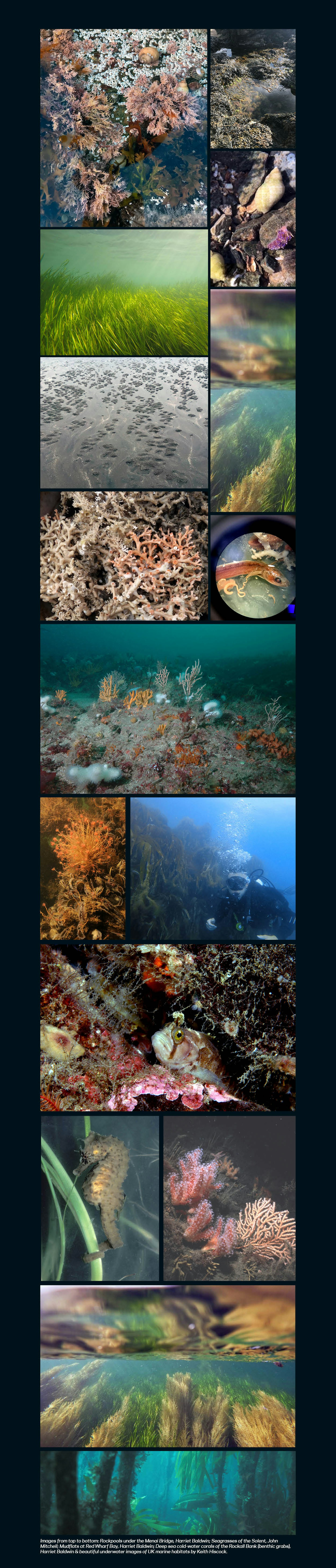
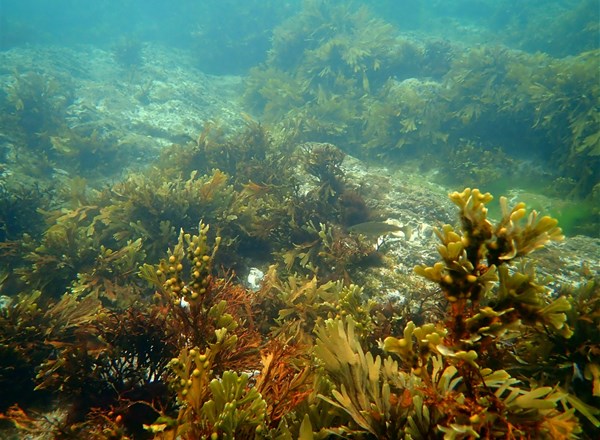
Let’s start on the coast. Rocky shores scattered with rockpools are wonderfully diverse zones. As you get further away from the sea onto the beach, only the most resilient species are equipped to survive in an area submerged in water for only a few hours a day. Whilst this is not an issue for hard-shelled molluscs such as mussels, barnacles and oysters, many other animals will prefer lower shore areas. Closer to sea level, competition for resources is increased, as there is only so much space and food within the rockpools. Fighting for shelter and space, you will find plenty of, blennies, shrimps and crabs hiding under rocks and seaweed. Unfortunately, like many other marine habitats, rockpools are fragile ecosystems and can easily be disturbed by beach visitors if not careful. Therefore, it is important to be mindful of wildlife and ensure that any displaced rocks are put back in the same place.
Sometimes found beside rocky shores, large mudflats reveal themselves at low tide. Found all around the country in depressions where water movement is limited, intertidal flats are common in harbours and estuaries, covering around 2700km2 of land. Although they may look barren and lifeless, these vast plains of nutrient rich fine silt and clay host a whole range of diverse species. Burrowers like cockles or worms call this habitat home. When they become exposed at low tide, they then become a feast for waterfowl and wading birds such as seagulls, oyster catchers and sandpipers. In deep-water mudflats, lobsters, brittlestars and crabs can be found hiding or foraging. In addition to their high biodiversity, mudflats are very effective carbon stores or “carbon sinks”. When the sea creatures that inhabit these muddy habitats die, rather than decomposing and releasing their carbon into the atmosphere, their bodies sink, trapping carbon within sediment layers. There could be thousands of years’ worth of trapped carbon in areas of undisturbed sediment layers – think of all the carbon stored!
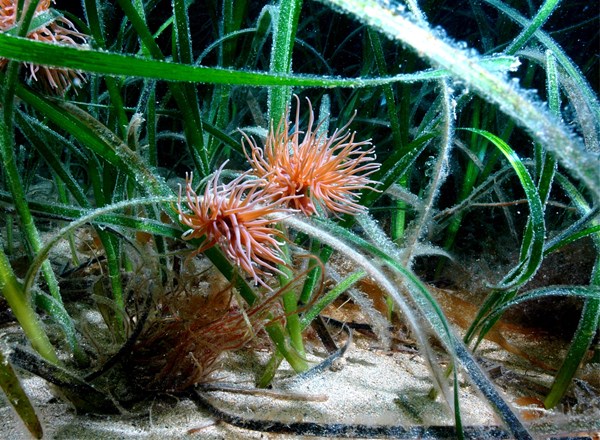
In contrast with homogeneous mudflats, and rarer still, few coasts in the country host lush underwater meadows of dense green leaves. These leaves don’t belong to kelp or seaweed but to one of only 3 plants able to flower underwater: seagrass. Very similar to their land counterpart, seagrass flowers and produces seeds. As this plant depends on sunlight to grow, it establishes itself in shallow waters, often at depths of around 4m deep. Estuaries, lagoons and sheltered areas such as the Solent, Sandwich and Pegwell, are ideal for its reproduction. True “ecosystem engineers”, seagrass is a natural solution to fight climate change, as it can absorb carbon 35 times faster than tropical rainforests! Their roots also help to prevent beach erosion and the dense vegetation seagrass forms softens the blow of strong waves, offering a nursery ground for many young fish, jellyfish and anemones. This biodiversity hotspot is also the only habitat where you will find the UK’s native seahorse species: the long-snouted and short-snouted seahorses. They use the stalks as cover from predators and grab onto them with their tails to avoid being swept away by currents. Unfortunately, in recent years, seagrass has become much rarer and harder to find. Due to a slime mould disease that appeared in the 1930s, 90% of seagrass meadows, approximately 30,000Km2, were lost. Since then, it has been difficult for the meadows to recover due to human disturbance. In particular, sewage discharge rich in nutrients that are toxic for seagrass have devastated seagrass habitats. Nevertheless, many restoration projects exist that are collecting seagrass seeds to try and plant them along the coast to extend the population.
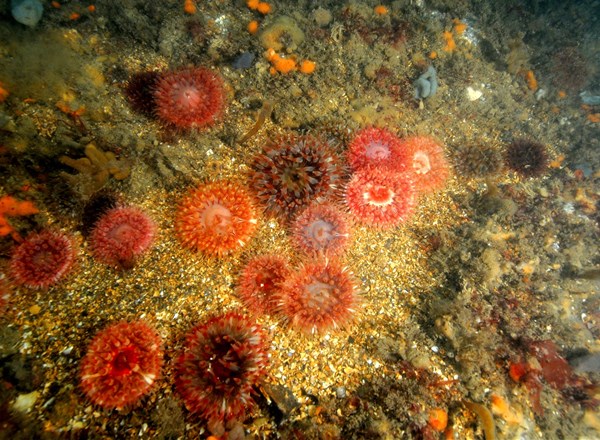
Finally, we will dive far beneath the waves, in cold waters thousands of feet below the surface. I am sure a cold and dark place is not what you would think of when imagining rich and thriving habitats. Yet, not only can you find many living things in areas like this, but even more incredibly, these deep-waters are home to cold-water coral reefs. Surprisingly, coral reefs are not only found in the warm and turquoise waters of the global south. Deep in the waters off the coast of North and West Scotland or the West coast of Ireland, mounds of cold-water corals cover areas as big as 100Km2! Where their warmer counterparts depend on a symbiotic relationship with algae, cold-water corals do not, making their growth slower, but allowing them to live in waters between 4 and 12◦C where little light penetrates at such depths. Mounds comprise of horny, black, and soft corals that offer shelter to deep-dwelling creatures such as species of crab, cod, sponges, lobsters, and anemones. The biodiversity of these cold-water ecosystems rivals their warm water cousins - tropical reefs.
As an island nation, the UK hosts some of the most diverse marine habitats in Europe. In the cold waters, wildlife and plants thrive. In light of the threats and challenges these habitats may be facing, it is ever more important for us to be aware of the riches our coastal and marine habitats hold.
Knowing how precious underwater ecosystems are drives us to push scientific, engineering and technological progress in order to best protect these fragile habitats. From renewable energy to reducing plastic waste & pollution, every step will get us closer to a thriving, biodiverse, blue future.
Interested in knowing more about how offshore industries and underwater habitats co-exist? Curious about the environmental studies and surveys that take place to ensure that offshore projects are sustainably developed, ensuring the protection of our precious marine environment? You can find our extensive library of ecological surveys and more by searching on our new interactive map. Simply filter by themes 'Bird', 'Epifauna and fish', 'Benthic ecology' or 'Marine mammals' to pull up environmental surveys. You can also find environmental survey data by using the search bar on our home page.
Maud Philippot - Coast Explorer Intern (The Crown Estate & Wildlife Trust)
We've selected a number of series containing information regarding marine habitat characterisation. Enjoy!