

2008-2009, Atlantic RMS, SeaGen Strangford Lough, Benthic Monitoring
Summary
Data & downloads
Reports
Related Pages
 Series
2010, SMRU, SeaGen Strangford Lough, Noise Biological Assessment
The Noise Biological Assessment aimed to evaluate the effects of underwater noise from the SeaGen tidal turbine in Strangford Lough on marine mammals and fish. Using methodologies including field-based acoustic measurements, propagation modeling, literature reviews, empirical species hearing studies, and analysis of behavioural thresholds, the research assessed impact zones and potential biological consequences of both tonal and broadband turbine noise. Results showed that seals and harbour porpoises can detect turbine noise over several kilometres under low ambient noise, with the greatest behavioural and masking effects, and potential for temporary or permanent hearing loss, occurring within tens to hundreds of metres from the source. Fish, particularly hearing specialists, are susceptible to communication masking and startle responses at similar ranges. Across all studies, major uncertainties remain due to limited field data, assumptions about species-specific sensitivity, and unmeasured variables such as particle motion. The consensus recommends further empirical research to better determine long-term population-level impacts and inform mitigation efforts as tidal turbines proliferate.
 Series
2009, Kongsberg, SeaGen Strangford Lough, Operational Underwater Noise
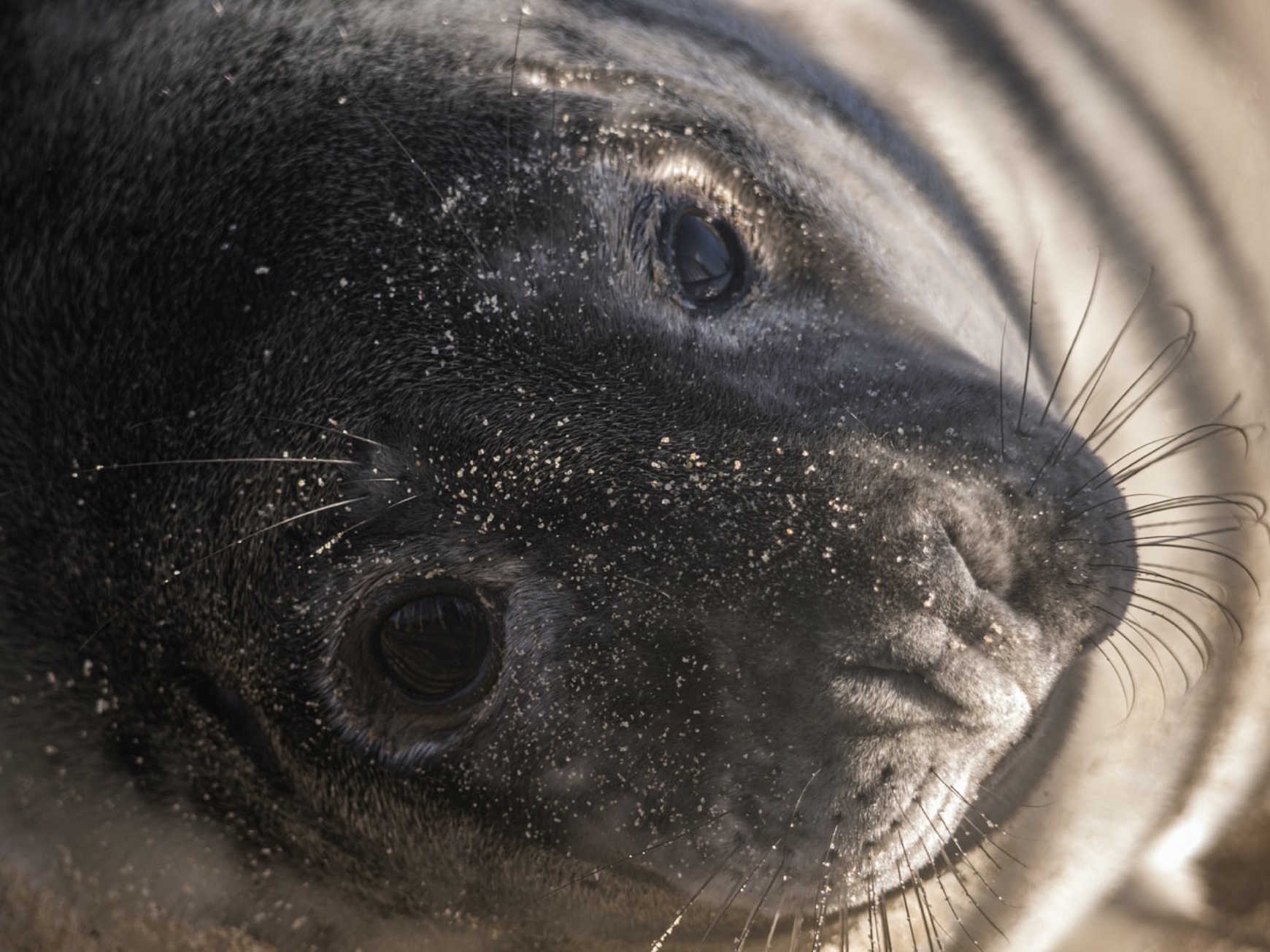
This technical report aimed to assess the underwater noise generated by the SeaGen power generator in Strangford Lough, England, and its potential impact on local marine mammals. Using high-fidelity digital hydrophone recordings collected on November 3rd and 4th, 2009, at varying tidal states and distances, the study analyzed sound levels, particularly in the context of the auditory sensitivities of common seals, grey seals, and harbour porpoises, through Power Spectral Density (PSD) measurements, species-specific hearing thresholds, and spatial noise mapping. Results indicated a concentration of acoustic energy near the turbines, especially to the north, likely influenced by local bathymetry, with maximum unweighted sound pressure levels up to 140.8 dB (re. 1µPa) and higher PSD levels north of the SeaGen pile compared to the south. Background noise and Strangford Ferry measurements provided context for the findings. Key recommendations include ongoing monitoring and species-specific assessments to evaluate environmental impacts, particularly given the variation in perceived noise among different marine mammals.
 Series
2008-2009, SMRU, SeaGen Strangford Lough, Sonar Monitoring of Marine Mammals around SeaGen
This series contains two reports relating to sonar monitoring of marine mammals around SeaGen in Strangford Lough. The first report presents a preliminary analysis of marine mammal tracks around the SeaGen turbine in Strangford Lough, NI. Data were collected using the Tritech SuperSeaking sonar system on the turbine. The second report is a summary report which presents an analysis of all target detections around the SeaGen turbine in Strangford Lough. It also provides a short summary of the relevant results from the telemetry studies carried out within the Lough (SMRU Ltd, 2009). The aim of the study was to provide an assessment of whether there were significant differences in the numbers of targets detected in close proximity to SeaGen between daylight hours and during the night and consequently, whether there was an increased risk to marine mammals at night.
 Series
2007-2011, Queen's University Belfast, SeaGen Strangford Lough, ADCP Current Monitoring Campaign
A campaign of moving vessel Accoustic Doppler Current Profiler (ADCP) surveys was conducted in Strangford Lough by Queen’s University Belfast as part of the overall comprehensive environmental monitoring programme associated with the installation of the 1.2MW tidal energy device Seagen (Marine Current Turbines Ltd) in 2008. The specific purpose of the campaign was to acquire sufficient data of the water flow regime within the area of interest in order to identify any discernible wake effects downstream of the turbine and the extents to which the wake is propagated. A programme of surveys was proposed and conducted during two distinct project phases; a pre-deployment phase before the turbine installation, and a post-deployment phase with the turbine fully operational. A downward looking TRDI 600kHz Workhorse ADCP was mounted on the vessel Cuan Shore together with the requisite ancillary sensors to acquire the raw data sets of water column profiles. The surveys developed a spatial and temporal matrix centred geographically around the turbine and temporally over various complete 13 hour tidal cycles, as well as being augmented by some localised surveys nearer to the turbine (near field). This series contains the survey report.
 Series
2006, Spouncer Associates, SeaGen Strangford Lough, Otter Walkover PresenceAbsence Survey
Royal Haskoning approached Spouncer Associates in July 2006 to undertake a survey required as part of environmental works for the SeaGen Marine Current Turbine Project. Before installing the turbine (due late 2006), directional drilling is required from the shore to provide the underground cable to supply the energy to the National Grid. The Environmental Statement identified that whilst the drilling itself will predominantly take place away from the intertidal, placing of seawater pumps may have an affect on otters if found to be present. The project required an otter presence / absence survey of the shore area in the vicinity of the proposed onshore works to extend 300m up and down shore of the proposed site, along the access road adjacent to Rue Point, south of Strangford. Royal Haskoning requested the following information as part of the Otter Presence/Absence Report: > Identify the use by otters of the area detailed in the aforementioned figure; and > Identify any features of particular importance to otters (especially holt sites or resting places which are protected under the Habitats Directive). > Provide the necessary information on the requirements for Disturbance Licenses if required. This series contains the survey report.
 Series
2006-2010, SMRU, SeaGen Strangford Lough, Monitoring of Harbour Porpoise in Strangford Lough with focus on the Narrows
Harbour porpoises are the most abundant marine mammal in British and Irish shelf waters, and are widely distributed throughout coastal and shelf waters. They regularly enter bays and estuaries, but the extent to which they exhibit home ranges is unknown. Harbour porpoises are extremely difficult to observe in the wild, as they generally travel alone or in small groups, surface irregularly and have a small dorsal fin with a low profile. Their presence is much easier to detect acoustically, as they habitually echolocate to orientate themselves and locate their food. Researchers have exploited this fact by developing a variety of passive acoustic measuring tools, which monitor the ultra‐sonic frequencies that characterise porpoise echolocation clicks. One such tool that is widely used by researchers studying porpoises is a self‐contained click detector known as a ‘T‐Pod’ or ‘Pod’. T‐PODs have been used in the present study to assess the frequency with which porpoises use the Narrows and enter Strangford Lough. This series contains two reports, one of which is an update with additional monitoring results.
 Series
2006-2009, SMRU, SeaGen Strangford Lough, Environmental Monitoring Programme Biannual Reports
This series contains two biannual reports (Nov 2008 and July 2009) generated by SMRU Ltd. as part of the Environmental Monitoring Programme at Strangford Lough, in relation to the SeaGen tidal device. Each biannual report contains specific survey reports relating to various marine mammal surveys undertaken within Strangford Lough. A range of monitoring surveys have been undertaken, including seal tagging, aerial surveys, sonar surveys and acoustic monitoring.
Series2006-2010, SMRU, SeaGen Strangford Lough, Using Telemetry to Investigate the Effect of SeaGen on Harbour Seal Behaviour and Movement
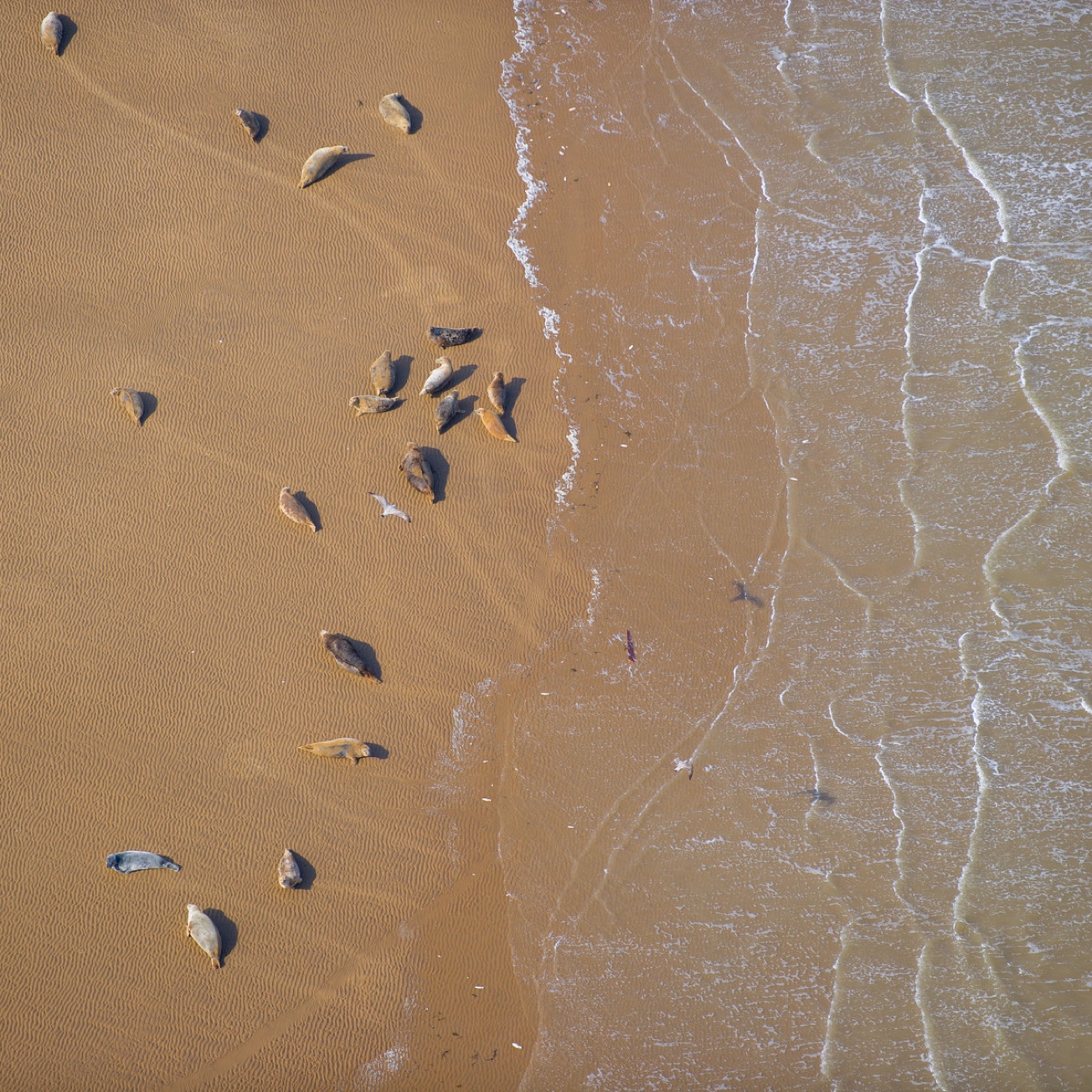
One of the principal environmental concerns about tidal turbines is the potential for injurious collision with marine animals. Until recently there has been little opportunity to collect and analyse data to assess this risk. Three separate deployments of GPS tags on harbour seals in Strangford Lough and Narrows during the development of the SeaGen tidal turbine have provided the first opportunity to measure individual seal behaviour in relation to the presence and operation of a commercial scale tidal turbine. Thirty six seals were tagged over three years, in 2006 (pre-installation), 2008 (during installation) and 2010 (operation). There was no overall difference in the rate at which seals travelled up and down the narrows past the location of the turbine between the three deployments. However these average rates had wide confidence limits as a result of a wide degree of variation in the behaviour of individual seals. This uncertainty limited the use of this data for investigating differences between years. In 2010, when the turbine was operational, there was evidence that the rate at which seals transited the Narrows reduced when the turbine was on, relative to when it was off. The biological importance of this reduction is unknown at present. Over all three years the frequency of transits was higher at slack tide than when the current was running. Although visual inspection of the distribution of locations where seals chose to transit the narrows suggested local avoidance of the turbine site in 2010, high inter-individual variability limited our ability to detect any significant difference. Examining the rate of transits which were close to the turbine (<25m) when it was operating gives an average rate for each seal of 3 transits per year. Scaling up to the total population suggested that 300 such transits may have occurred during the period between April and August. There were 210 emergency shut downs during this same period. The results of this study suggest that the operation of the turbine is affecting the transit behaviour of seals in the narrows and therefore the risk of seals colliding with an operational tidal turbine may be lower than would be estimated by assuming no avoidance and a spatial and temporal uniform density of animals. This series contains the survey report.
 Series
2005, Royal Haskoning, SeaGen Strangford Lough, Local Community Awareness and Perception of SeaGen MCT Project
The landward shores of Strangford Lough are predominantly rural in setting with the two small towns of Strangford and Portaferry on the east and west banks of the Narrows. Leisure, tourism and fisheries are important parts of the local economy. The SeaGen project will result in the implementation of a large piece of operating machinery in the Lough which is likely to create a wide range of ‘mix-view’ perceptions throughout the community, whether they be positive views of potential increase in area profile or provision of a future showpiece for tidal technology or negative perceptions of environmental and/or economic impact. Tidal technology is in its infancy and therefore the technical efficiency and applicability of the system and its potential impact on the environment is uncertain. It is therefore important that the local community are made aware of the project and kept informed at all times of the project’s development and the ongoing environmental monitoring. An open-invitation public exhibition was held in Strangford and Portaferry on the 16th of April 2005 to inform the local communities about the project proposed. Throughout the design of the project, ongoing newsletters were produced and distributed to the local community. MCT plan to produce quarterly newsletters to keep the public informed and have developed a specific website (in development) through which the public can obtain updates and review progress reports. MCT will be hosting another public exhibition in prior to installation in late 2006, to increase public awareness. It is important to monitor the local community’s awareness and perception levels of the project to assess the extent of the need and the appropriate ways to disseminate the project information. The report in this series provides baseline awareness and knowledge levels of the local community.
Series2005-2006, RHDHV, SeaGen Strangford Lough, Marine Species Visual Baseline Survey
Marine Current Turbines Ltd has been granted permission by the Environment and Heritage Service, Northern Ireland through provision of a Food and Environmental Protection (FEPA) Licence, to install an experimental marine current turbine in the Narrows of Strangford Lough.Strangford Lough supports a variety of marine habitats and communities, with over 2,000 recorded species and is important for wintering and breeding wetland birds, as well as for marine mammals, including seals, porpoises and dolphins. This variety and richness of habitats and species has led to the Lough being afforded the highest level of environmental protection namely, an international Ramsar Site, European Special Area of Conservation (candidate) and Special Protection Area. The Environment and Heritage Service (EHS), is the Government regulator for the Department of Environment, Northern Ireland (DOENI). Permission to install the turbine was granted by EHS on the condition that a rigorous and robust environmental monitoring project was implemented to ensure that any changes caused by the development, which might affect the integrity of the site, would be identified before significant impact occurs. The visual observation baseline report in this series presents the results of 13 months of species observation surveys. QUB have undertaken monthly surveys since May 2005 of marine mammals and important bird species, all of which have the potential to be affected by the installation and operation of the turbine. The result is a 13 month data set to June 2005 which forms an effective baseline from which all future observation data can be compared. Changes in the animal sightings and behaviour that occur during the 5 years of observations will now be detected through detailed statistical analysis of the data undertaken by biometricians at SMRU. It is anticipated that this will support any changes highlighted by visual interpretation of the future data sets. If actual significant changes are detected, detailed investigation will allow the Science Group (as advisors) and EHS (as regulators), to make judge whether the change detected is the direct result of the installation or operation of the turbine, before the integrity of the site is significantly impacted. Appropriate management action can then be undertaken.
 Series
2005-2009, University of Exeter, SeaGen Strangford Lough, Impacts on the Avian Community
Data was collected during May 2005 and September 2009, although 2005 data was omitted from the analysis as methodologies were still being refined. All statistical analyses and data manipulations were carried out in the R statistical and computing environment. The data were constrained to include only avian taxa, leaving 101014 observations. Previous work into the effects of wind farms had identified ‘avoidance distance’ as the best metric to determine the impacts of such structures (Devereux et al. 2008, Madsen & Boertmann 2008). Therefore the distance of each observation to the position of the SeaGen tidal turbine was calculated. Distances were calculated using the Haversine formula to calculate great-circle distances between the observation and SeaGen. This series contains the statistical report.
 Series
2005-2010, RHDHV, SeaGen Strangford Lough, Environmental Monitoring Programme
In 2004, Marine Current Turbines Ltd (MCT) identified the Narrows of Strangford Lough, Northern Ireland as their preferred location for the deployment of the SeaGen device. An Environmental Impact Assessment (EIA) was undertaken by Royal Haskoning, and completed in June 2005 with the production of an Environmental Statement (ES). Based on the consultation responses and requirements of EU Directives and Northern Ireland environmental legislation, a conditional FEPA marine construction licence was issued to MCT on 15 December 2005. Subsequent variations of the licence have taken into account the increased scientific knowledge built up through the ongoing monitoring program and the adaptive management approach adopted by MCT. The issue of the licence required MCT to establish an Environmental Monitoring Plan (EMP) and a number of mitigation measures. Data collection began, pre-installation, in April 2005 and formed the basis of an Environmental Baseline Report, against which all future monitoring during installation, commissioning and decommissioning could be compared.The results from each of monitoring strands of the EMP were evaluated regularly to ensure that any impact of SeaGen on the marine environment in Strangford Lough could be detected at an early stage. Using an adaptive management approach, the data collected has provided evidence to support reduction in mitigation requirements. A variety of reports are included in this series, including baseline, updates and final.