

2014, Port of London Authority, Thanet, Bathymetry Survey
Summary
Data & downloads
Datasets
Related Pages
 Series
2022, Natural Power, Thanet, Benthic Survey
Benthic survey results of grab and video sampling conducted over the Thanet Wind Farm to assess the potential impacts of construction works on the benthic ecology across the site. The survey was conducted in September 2022.
Series2019, Natural Power Consultants Ltd., Thanet Offshore Wind Farm, Benthic Survey
Benthic survey results of grab and video sampling conducted over the Thanet Wind Farm to assess the potential impacts of construction works on the benthic ecology across the site. The survey was conducted in September 2019.
 Series
2013, Titan Environmental Surveys, Thanet, Scour Survey (Campaign 3)
Titan Environmental Surveys Ltd was commissioned by Gardline Geosurvey Ltd to conduct the third campaign for the Thanet Offshore Windfarm post-construction scour survey around 4No representative turbines and 4No cable crossing points to monitor the scour around these structures. The windfarm is located approximately 20km north east of Ramsgate with the export cable route running south-easterly and eventually ashore into Pegwell Bay. The purpose of the survey was to provide an assessment of the foundations of at least four wind turbine generators and four cable crossings with the use of swathe bathymetry and high resolution side scan sonar. The identified occurrence of Sabelleria spinulosa in the scour pits was required to be cross-referenced with previously conducted surveys. Swathe bathymetry was collected to IHO 1a standard and will be used to compare against historical data collected during the post construction survey.
 Series
2012 - 2013, RHDHV, Thanet, Annual Monitoring Report
The Thanet Offshore Wind Farm is located in the Thames Estuary, 11.3km from Foreness Point in Kent. The export cables come ashore at Pegwell Bay and run for 2.2km to the existing substation site at Richborough where connection to the National Grid distribution network is made. The wind farm consists of 100 turbines which have a maximum output of 300MW. Construction of the Thanet Offshore Wind Farm commenced in March 2009 and was completed at the end of December 2011. The wind farm became fully operational in December 2012. Environmental monitoring surveys have been carried out in and around the Thanet Offshore Wind Farm site during the pre, during and post-construction stages of the development. This has been a requirement of the licences issued under the Marine and Coastal Access Act (Marine Licence); formally the Food and Environmental Protection Act (FEPA) licence. This document represents a summary of the post-construction monitoring that has been undertaken since the wind farm became operational.
 Series
2012, Royal Haskoning DHV, Thanet Offshore Wind Farm, Post-Construction Elasmobranch Surveys
Four elasmobranch surveys were undertaken within and adjacent to the Thanet offshore wind farm along the export cable route: two pre-construction in September 2007 and July 2008, and two post-construction surveys were undertaken in August and September 2012. The aim of the survey was to establish the abundance and composition of elasmobranch species within the area, and to determine whether there are any differences between the results of the pre-construction and post-construction surveys. The statistical analysis of the pre- and postconstruction data is given in BMMa (2013) and BMMb (2013). Elasmobranchs are the main group of organisms known to be electrosensitive, being able to detect bioelectric emissions from prey, conspecifics and potential predators/competitors (Gill et al., 2005). They have specialist electroreceptive organs called Ampullae of Lorenzini (AoL) and are highly sensitive to electric fields, being able to detect very weak voltage gradients, as low as 5 to 20nV/m (Tricas and New, 1998). They are also known to either detect magnetic fields using their electrosensory systems or through a yet-to-be described magnetite receptor system (Normandeau et al., 2011).
 Series
2012, Marine Ecological Surveys, Thanet, Benthic Resources Survey
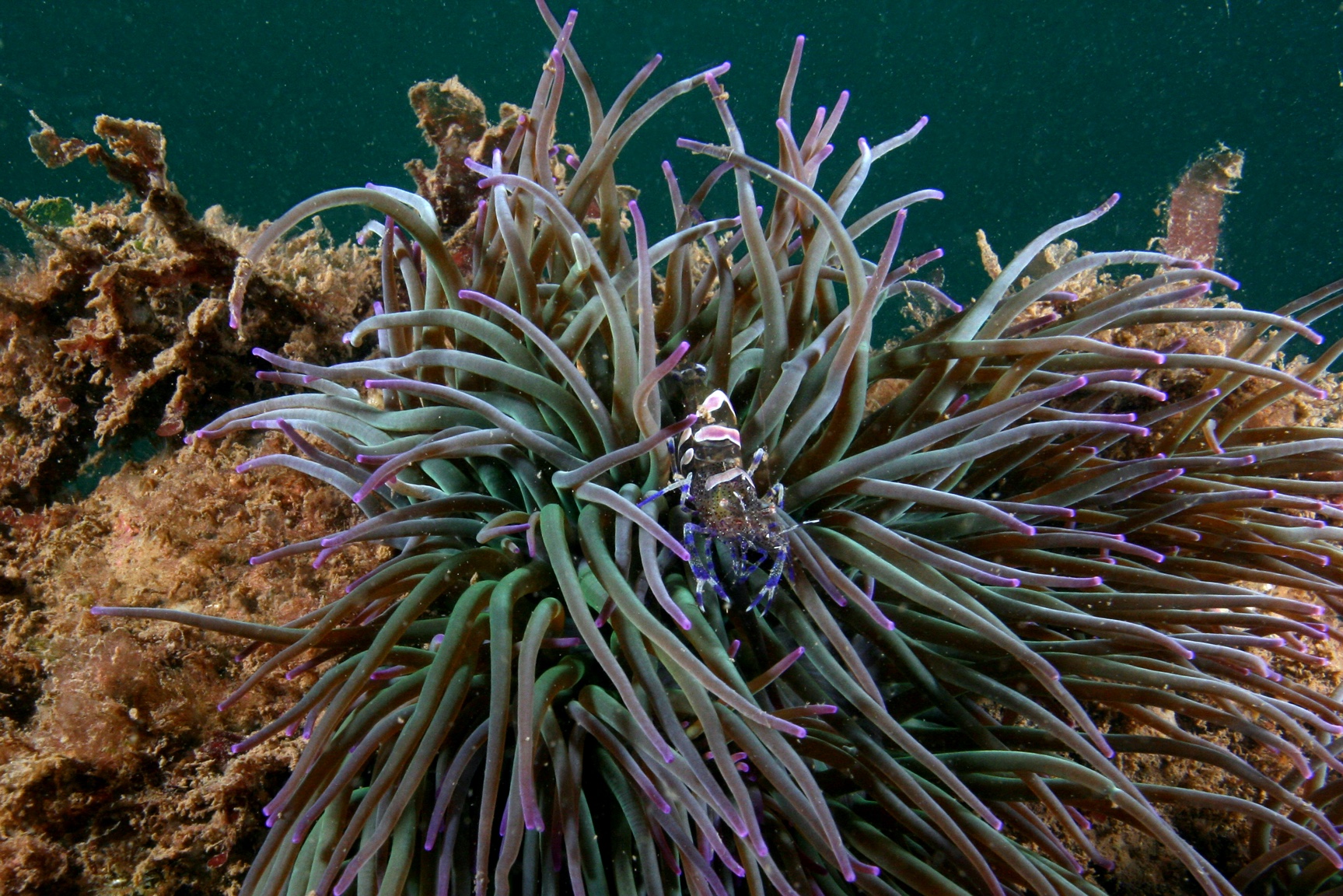
Marine Ecological Surveys Limited (MESL) was commissioned by Vattenfall and Haskoning UK Ltd on behalf of Thanet Offshore Wind Ltd (TOWL) to undertake a post‐construction monitoring survey of benthic resources at Thanet Offshore Wind Farm (TOWF). The monopile colonisation study which will determine the colonisation on four monopile foundations in terms of dominant species and diversity and assess the rate of colonisation will be undertaken during the first appropriate weather window in spring 2013, as approved by the MMO and their advisors. The survey followed the specification set out in the TOWF Terms of Reference which were agreed with industry regulators prior to commencement of the survey. A total of 53 faunal grabs, 42 sediment samples for particle size analysis, 21 sediment samples for organic content analysis and 230 seabed images were acquired during the course of the investigation.
 Series
2012, Royal Haskoning DHV, Thanet Offshore Wind Farm, Fish and Benthic Survey
In order to monitor the abundance and composition of adult and juvenile fish and epi-benthic species within the area, an otter and beam trawl survey was undertaken within and adjacent to the operational Thanet offshore wind farm between the 3rd and 6th July 2012. The results of the survey have been compared with results from the April 2012 post-construction survey and the April and July 2005 pre-construction surveys. Overall in both sampling areas (control and wind farm), the total catch rates were highest in the post-construction surveys, with substantially higher post-construction catch rates recorded within the wind farm. Species diversity showed little change between the pre- and post-construction surveys, suggesting that the operational wind farm has not adversely affected the localised fish communities. The pre- and post-construction survey results potentially indicate that there may be an attraction effect with regards to lesser spotted dogfish (Scyliorhinus canicula) and thornback ray (Raja clavata). It should be noted however, that considerable variation was observed in the postconstruction survey results for these species, potentially suggesting that any changes may be due to natural variation or to the effects of factors unrelated to the wind farm construction and operation.
Series2012, Gardline Geosurvey, Thanet, Geophysical Surveys
Gardline Geosurvey carried out a post-construction geophysical site survey and export cable route survey for Thanet Offshore Wind Ltd and Vattenfall, within the Thanet Offshore Wind Farm located off the Kent coast. The object of the survey was to compare the Pre-Construction Debris, Morphology and Sabellaria spinulosa Surveys of 2005 and 2007, to identify all hazards or obstructions on the seabed around the wind farm and export cable route, and compare with the Pre-Construction Surveys. The survey utilised single beam and multi-beam echo sounder, sidescan sonar and magnetometer equipment. Positioning control for the survey was the Fugro Starfix DGNSS service. The scope of work called for seabed information with which to identify debris, morphology and Sabellaria spinulosa. Titan Environmental Surveys Ltd conducted the nearshore surveys, as well as undertaking the scour surveys around four of the wind turbines – this is presented under separate cover by Titan.
 Series
2010-2013, RHDHV, Thanet, Ornithological Monitoring
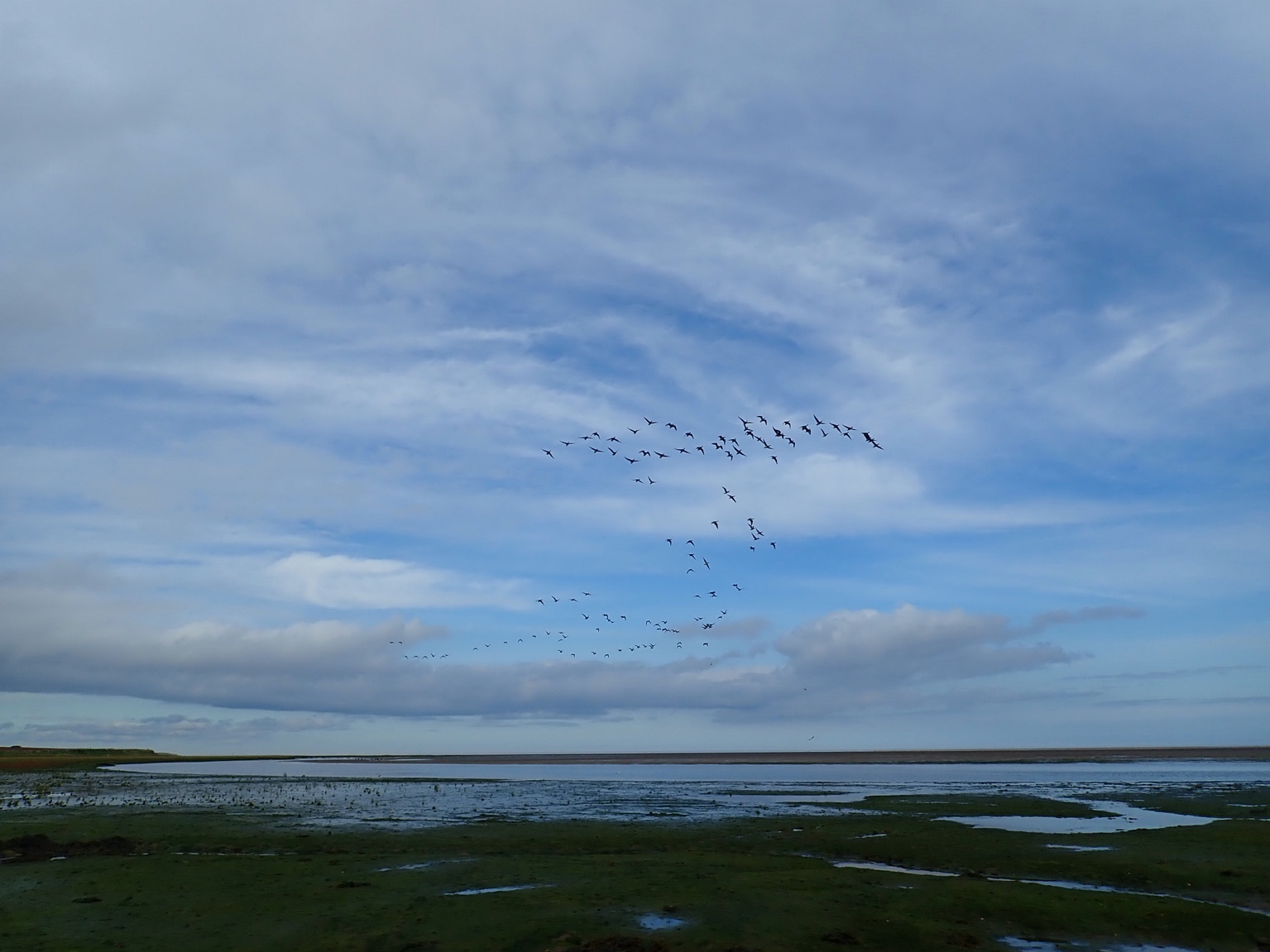
The main aim of the FEPA monitoring program is to determine the distribution and abundance of seabirds using the Thanet Offshore Wind Farm site and its surrounds before, during and after the construction phase of the wind farm. Standard survey methodologies have been used, following Camphuysen et al. (2004) and have remained consistent throughout the pre, during and post-construction monitoring. The Thanet Offshore Wind Farm (Thanet) project is located in the Thames Estuary Strategic Environmental Assessment (SEA) area, approximately 11km off Foreness Point, within the Outer Thames Estuary. The Thanet project received consent in December 2006, with the most recent FEPA license being dated July 2010 (33119/10/1). The Thanet project consists of 100 Vestas V90 3MW wind turbines located in water depths of 15-25m below chart datum, and extends over an area of 35km2. Each turbine is 115m tall at its highest point, with a minimum clearance above sea level of 22m. The turbine separation is approximately 500m along rows and 800m between rows. The 2012-13 surveys are considered to be post construction as the installation of the 100 turbines and the offshore substation has now been completed.
 Series
2010-2012, Royal Hakoning DHV, Thanet, Saltmarsh Recovery Monitoring Survey
The Thanet Offshore Wind Farm (TOW) project is located approximately 11.3km off Foreness Point, the most easterly part of Kent (see Figure 1.1) and its cable landfall is located within Pegwell Bay (BNG 634585 E 163850 N). The cable corridor crosses intertidal habitat before following the alignment of the nearby coastal road to Richborough (also located on Figure 1.1). Following discussions with the Marine Management Organisation (MMO) in 2009, the cable was installed using an onshore cable plough as a means of reducing disturbance to the surrounding habitat. During the cable installation works, a 15m wide corridor of saltmarsh was disturbed. Six monthly surveys of the area were undertaken between March and August 2010 due to a request from Natural England to monitor saltmarsh recovery. Another survey was undertaken in August 2011 to determine if the area of new saltmarsh had established sufficiently to blend in with the adjacent existing areas. Following a review of the 2011 survey and report, Natural England requested an additional survey, which was subsequently undertaken in 2012. The survey was undertaken on the 21st September 2012 and used the agreed methodology for which all the previous surveys followed. As with the 2011 survey, quadrats were also taken along the cable corridor and the surrounding saltmarsh to allow a comparison of the habitats. Details of the proposed survey methodology, including discussions with Natural England, are provided in Section 3 and Appendix A.
 Series
2010, Subacoustech, Thanet, Measurement and assessment of underwater noise during impact piling operations
This report has been prepared by Subacoustech Environmental Ltd for Thanet Offshore Wind (TOW) Limited and contains the results of the additional monitoring requested by the Licensing Authority in order to allow TOW to continue installing monopile foundations for the Thanet Offshore Wind Farm (Thanet) project during the spawning season of Thames herring Clupea harengus. The additional monitoring was carried out during impact piling operations to install the final three piles at the Thanet project, being undertaken between the 19th and 23rd January 2010.
 Series
2009, RHDHV, Thanet, Operational Underwater Noise Assessment
After the post construction environmental monitoring plan (PCEMP) was produced for the Thanet offshore Windfarm it was requested to consider the use of desk-based modelling studies to assess the potential effects of sub-sea noise and vibration caused by the OWF on marine fauna. The Marine Management Organisation (MMO) agreed that this was an acceptable approach, provided that this modelling work were based on a comprehensive dataset of noise propagation, measured for the Thanet OWF and if possible, on data from other OWFs in the Thames Estuary and other regions. Once the results of the modelling exercise are available, the MMO will make a final decision on the need for conducting further sub-sea noise monitoring.ed.