
2010, COWRIE Research, A Further Review of Sediment Monitoring Data
Summary
Data & downloads
Reports
Related Pages
 Series
2011, Ichthys Marine, COWRIE Research, Benefits and disadvantages of co-locating windfarms and marine conservation zones
In summer 2010, Ichthys Marine produced a report for Collaborative Offshore Wind Research Into the Environment (COWRIE) that identified options and opportunities to mitigate any adverse impacts on fishing activities that resulted from constructing and operating windfarms. One of the possible mitigation options identified was to co-locate windfarms with MCZs, so that MCZs are designated in the same areas as, or overlap with, windfarms. This mitigation option was predicated on the idea that the when MCZs are designated, conservation objectives may require that some or all fishing activities are stopped inside those sites, while fishing activities may also be constrained by or excluded from offshore windfarms. Hence, if fishing was to be affected by both windfarms and MCZs, co-locating windfarms with MCZs might reduce their combined impact on the fishing industry. In summary, more detailed information on conservation objectives for MCZs and on the management and monitoring regimes that will be imposed to meet those objectives is urgently needed in order for stakeholders to take informed decisions on co-location. The findings of this report are solely those of the author, after reviewing relevant literature and having been informed by stakeholder consultation.
 Series
2010, Ichthys Marine Ecological Consulting Ltd, COWRIE Research, Options and opportunities for marine fisheries mitigation associated with windfarms
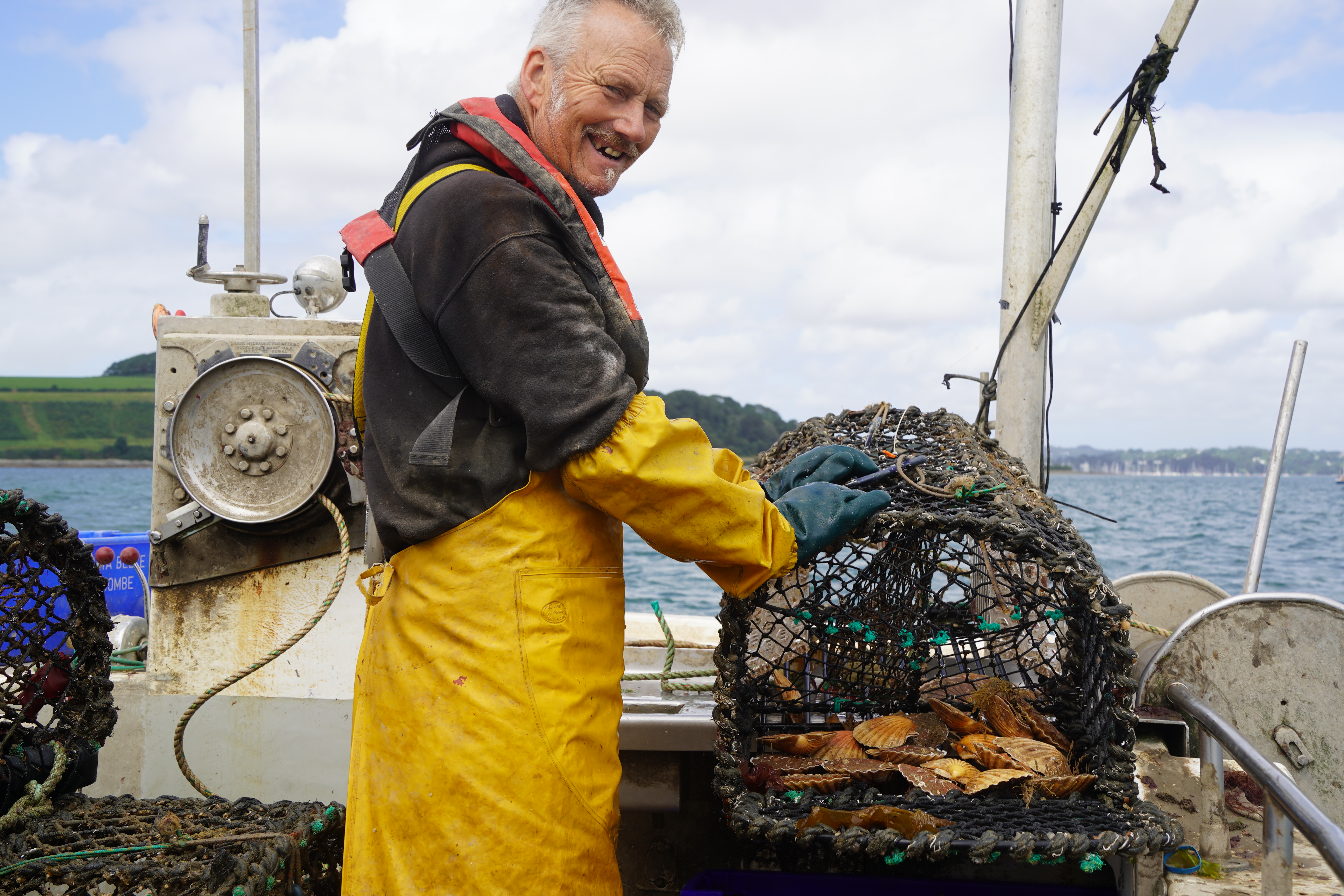
The establishment of windfarms at sea has the potential to cause disruption to commercial fishing activities, including through the loss of access to some fishing grounds for the operational life of the windfarm. In light of the potential for fishermen to lose access to significant sea areas within offshore windfarms, this project was focused on supporting commercial fishermen and dependent fishing communities ashore over the long term by investigating options and opportunities for marine fisheries mitigation associated with windfarms. The overall aim of the project was to develop a menu of possible mitigation options which would be of use to fishermen, developers, regulatory and statutory bodies and marine resource managers in discussions related to current and future windfarm developments, as well as in other offshore industry developments and in any future consideration of marine spatial planning issues.
 Series
2010, SEAMARCO, COWRIE Research, Acoustic Mitigation Devices (AMDs) to Deter Marine Mammals from Pile Driving Areas
For the sustainable development of the offshore renewable energy industry, it is necessary to reduce or avoid the damaging effects of noise (such as death or permanent hearing damage), from activities which produce high sound pressure levels, such as pile driving, on marine mammals. One way to achieve this is to ensure that marine mammals are not present in areas where loud noises are being produced, by deterring them by means of safe sounds produced by Acoustic Mitigation Devices (AMDs). Research is needed to determine whether AMDs can mitigate immediate vicinity impacts of loud sounds, which could give rise to temporary or permanent hearing damage, injury or death of marine mammals. In the North Sea, the two most abundant marine mammal species are the harbour porpoise (Phocoena phocoena) and the harbour seal (Phoca vitulina). COWRIE commissioned SEAMARCO to carry out four studies on the audibility of sounds produced by three selected AMDs and their effect on the behaviour of harbour porpoises and harbour seals (playback experiments). In addition to achieving these aims, SEAMARCO estimated the distances at which sounds from AMDs are audible to, and elicit behavioural responses in, harbour porpoises and harbour seals.
Series2010, Subacoustech, COWRIE Research, Measurements of Underwater Noise Generated by Acoustic Mitigation Devices
The series, conducted by Subacoustech Environmental Ltd for the Collaborative Offshore Wind Research into the Environment (COWRIE) from January to December 2010, aimed to analyze and compare the underwater noise generated by four Acoustic Mitigation Devices (AMDs)—Ace Aquatec, Aquatec Aquamark 100, Lofitech, and Marconi Seal Scrammer—to assess their suitability and potential impacts on marine mammals such as seals and harbour porpoises. Using controlled experiments in a flooded quarry with a vertical hydrophone array and digitized, calibrated acoustic measurements, data was collected at various depths (up to 20 m) and distances (1–80 m), supported by a literature review and analysis of auditory data. Findings showed that Ace Aquatec, Lofitech, and Marconi devices emitted similar high noise levels, often matching the hearing sensitivity and behavioral thresholds of target species, while Aquatec AQUAmark 100 operated at lower, more selective levels.
Series2010, Cefas, COWRIE Research, Effects of Pile-Driving Noise on the Behaviour of Marine Fish
The objective of this project was to perform experimental research on effects of pile-driving noise on cod and sole. The study was intended to improve the understanding of the threshold of exposure that lead to behavioural responses in commercially important fish. A further objective was to define the characteristics, the scale and the duration of responses as a function of sound exposure. Finally, the study aimed to interpret the results in light of pile-driving operations in the marine environment. The results of the study shall guide regulatory advice and the implementation of mitigation measures in the construction of offshore wind farms in UK waters.
 Series
2009, BTO, COWRIE Research, High Definition Imagery for Surveying Seabirds and Marine Mammals
The aim of this report was to review trials if high definition imagery technology in the monitoring and assessment of bird numbers at offshore sites, and produce recommendations and protocols on its use alongside existing survey methodology, notably in light of its possible use in surveying round 3 wind farm development zones. With the objective to summarise the existing high definition imagery studies that have taken place, assessing what parameters were used in each and to undertake a workshop bringing together key users, developers and regulators of the industry, with a view to setting protocols and standards on the use of high definition imagery technology for seabird and mammal surveys. Information on the trials of high definition imagery technology for survey were obtained from HiDef Aerial Surveying Ltd (hereafter also HiDef), the Danish National Environment Research Institute (NERI), APEM Ltd, the University of St.Andrews, and the RSK Group plc. Information was collated in the form of reports and summaries on particular surveys, and was split into technical categories of digital video and digital still photography for further summarising.
 Series
2009, ABPmer, COWRIE Research, Coastal Process Modelling for Environmental Impact Assessment
This report provides an update to existing best practice guidance on the application and use of numerical models to predict the potential impact from offshore wind farms on coastal processes. It provides guidance on the scoping and design stages of the coastal processes part of an Environmental Impact Assessment. It provides guidance on the requirements for numerical modelling and how to assess the extent and quality of any numerical modelling work proposed and undertaken.
 Series
2001, Surfers Against Sewage, COWRIE Research, Guidance on Environmental Impact Assessment on surfing resources and recreation
The aim of this report is to highlight the impacts offshore renewable energy development will have on surfing resources and recreation. Using data from a 2001 survey of surfers in Cornwall a profile of surfer's habits has been drawn up, this along with UK and Australian surfer spending data has been used to project an estimate of the economic input surfing has on UK surfing areas. An EIA study was carried out on Round 1 offshore sites and the effects on quality of surfing waves was negligible, however, when these results are scaled up to incorporate the larger Round 2 and Round 3 developments it is shown that they will have an effect on surfing wave quality and therefore potentially harm the local economy or surfing regions.
 Series
2009, RPS, COWRIE Research, Best Practice Guidance for Ornithological Monitoring at Offshore Windfarms
This COWRIE report updates the Desholm et al. (2005) document on the use of remote techniques for ornithological monitoring for offshore windfarm studies. However, Desholm et al. (2005) did not provide offshore windfarm developers with clear and practical guidance on the ‘best practice’ application of remote techniques for effectively observing the behaviour of target bird species. In the UK, ‘best practice’ guidance to highlight appropriate remote techniques for assessing behaviour of individual target species, or groups of species, has been much needed. Consequently, the implementation of remote techniques in ornithological assessments within Environmental Impact Assessments (EIA) was variable during Round 1 (R1) and Round 2 (R2) in the UK.The aim of this report was not to re-iterate technical information contained within the original COWRIE report but to provide clear ‘best practice’ guidance. Our aim is to ensure that this guidance is applicable for ornithological assessments made within the planning and EIA process for the STWR and R3in the UK.
 Series
2009, BTO, COWRIE Research, A Review of Assessment Methodologies for Offshore Windfarms
COWRIE previously published guidelines for ship and aerial survey of marine birds for offshore windfarm assessments (Camphuysen et al. 2004). The purposes of the current review are fourfold: a. to assess the extent to which these recommendations have been followed; b. to identify any differences in interpretation of the guidance between sites; c. to test the practicalities of using high definition cameras during aerial surveys; d. to provide more rigorous guidelines for the type of analytical techniques that should be used. The BTO and COWRIE undertook a desk based study using datasets obtained from previous COWRIE surveys.
 Series
2009, HiDef Aerial Surveying Ltd., COWRIE Research, High Resolution Video Survey of Seabirds and Mammals
This project uses high definition video surveys to monitor sea bird and mammal populations. The trial and feasibility study was undertaken in March and April 2009 to study different species in large far offshore areas and to provide further confidence in the technique developed by HiDef Aerial Surveying Ltd in the Norfolk area.
 Series
2009, CREEM, COWRIE Research, Seabird abundance data and modelling
The report in this series describes design-based and model-based estimates of abundance for a group of seabirds who reside in large aggregations (scoters) and another group of seabirds that are less consistently clumped (‘gulls’) from three types of aerial surveys in Carmarthen Bay. Each type of survey was conducted on four dates during the month of March 2009 using different amounts of effort. This work explores patterns in estimates derived from different data collection and data analysis methods for both types of seabird groups. The work follows on from an examination of a portion of this data set conducted by Rexstad and Buckland (2009).