

2003, Marine and Fisheries Agency, Scroby Sands Offshore Wind Farm, FEPA Licence
Summary
Data & downloads
Reports
Related Pages
 Series
2015, Projects46, Scroby Sands, Multibeam Echo Sounder Survey
The report in this series provides the results of the multibeam echo sounder survey of Scroby Sands offshore wind farm. The survey was undertaken between the 19th and 22nd of May 2015. The scope of the work included the 30 x wind turbine generators plus 20m; a corridor of 10m either side of the cables connecting the wind turbines; and the three export cables with a 10m corridor either side and into shore as far as sea depth allowed.
Series2014, SAND Geophysics Norfolk Marine, Scroby Sands, Multibeam Bathymetry and Sidescan Sonar Survey
A bathymetric and sidescan survey at Scroby Sands windfarm site including 20m coverage around each of the 30 wind turbines, a 10m corridor along cables and around the base of the met mast was conducted between 1 September 2014 and 17 September 2014. The acquired bathymetry data shows the effect of the scour protection where installed and the effects of scour around the turbines with no protection installed. Sidescan sonar data identified a number of cable exposures, predominantly close to turbines, which have not changed considerably since the previous year. The data is provided as georeferenced drawings using British National Grid horizontal datum. Vertical Datum or Chart Datum was taken as 1.56m below Ordnance Datum (Gorelston).
 Series
2013, Aspect Land and Hydrographic Surveys Chartered Surveyors, Scroby Sands, Multibeam Bathymetric and Sidescan Sonar Survey
Multibeam bathymetric and sidescan sonar surveys were carried simultaneouslyout in the Scroby Sands turbine field. The survey aimed to assess the scour around the base of each turbine and any exposure of the cables associated with the turbine field. The multibeam survey was conducted to provide 100 per cent coverage of the seabed in an area 20m around each trubine and 10m either side of known cable routes.
 Series
2013, ECON Ecological Consultancy, Scroby Sands, Little Tern Survey
The overall aim of this project was to assess the current use of Scroby Sands Offshore Wind Farm by the Little Tern (Sternula albifrons) and the associated risk of collision that this poses. The study was to inform the management of Great Yarmouth North Denes Special Protection Area (SPA) and its designated population of Little terns, with the increased incidence of nesting on the main bank of Scroby Sands first noted in 2010, rather than on the mainland beach at North Denes. Eight boat-based surveys over a route of 46 km incorporating 10.3 km within the wind farm, utilising snapshots for flying terns every 250m were performed approximately every two weeks from early May to mid August 2013. The mean density surface produced by kernel density estimation showed concentration of Little Terns around the former colony at North Denes in association with the higher fish densities, and also at the southern end of Scroby Sands. The latter reflected the use of the main bank as a breeding site. The first nesting attempt by about 33 pairs of Little Terns in mid-June was unsuccessful as a result of a high tide in late June. Re-nesting occurred with a peak of 70 nests by mid-July. Most nests appear to have failed although a few juveniles (perhaps up to 9) may have fledged over the course of the season. Otherwise. the main colony of the East Norfolk Little Tern population in 2013 was located at Winterton. The relatively small and fluctuating Little Tern population on Scroby Sands with no evidence of nesting at North Denes or Caister was reflected in the lack of use of the offshore wind farm, with no Little terns recorded in snapshots during the surveys, and only a single record outside of snapshots. As a result there was no predicted collision risk for Little Terns with the offshore wind farm in 2013. Although the actual risk cannot be truly quantified until sampling is conducted in a season when Little Terns nest at Scroby Sands in large numbers. Further sampling is therefore recommended.
Series2006, Lankelma Andrews, Scroby Sands, Bathymetric Survey
This series examines the swath bathymetry survey that took place across the site of the Scoby Sands offshore wind farm. Lankelma Andrews carried out a swath batheymtrey survey at the site of the Scroby Sands wind farm off Great Yarmouth. The survey took place between 6th and 22nd November 2006. The scope of the survey was to undertake a hydrographic survey and obtain maximum coverage of the Scroby Sands Wind Farm site and export cable routes. Virtually complete swath coverage was obtained over the whole survey area, where depths allowed. The survey results for the area are presented in both a drawing and digital format.
 Series
2005, Unicomarine, Scroby Sands, Benthic Ecology Survey Comparison
Two benthic biological surveys have been carried out to assess the ecological impact on the benthos of the construction of wind turbines and associated structures on the seabed at Scroby Sands off Great Yarmouth. This report presents the results of the second survey, in July 2005, following the construction of the wind farm. Subsequently the results are compared with those of 1998. The conclusions of this assessment show that the seabed over most of the survey area comprised moderately clean sand with a limited fauna of burrowing polychaetes and Crustacea. There were changes in the fauna between the years: the numbers of taxa and individuals were lower in 2005 and samples from different years belonged to different faunal cluster groups but the majority were assigned to the same biotope. It is likely that the observed changes were due to natural factors but data from an annual national survey or from other sandbanks would have been needed for certainty.
Series2004, Cns Renewables, Scroby Sands, Scroby Sands Export Cable Project
On behalf of Vestas, CNS provided the Cable Installation Barges CIB Pontra Maris and the Fetsy L, complete with support anchor handling vessels and tow tug for the installation of the export cables. From this installation spread, the cables were simultaneously laid and buried from the Mean High Water Line to the wind farm location, all cables were within the pre-determined corridor. There was no evidence of anything which would impede the laying and burial of the cables along the proposed route.
 Series
2004, ECON, Scroby Sands, Ornithological Monitoring: Assessing the potential impact of the proposed wind farm upon Little tern
This project concerns the monitoring of Little Terns during the construction phase of the Scroby Sands Offshore Windfarm. Monitoring was designed with the primary aim of assessing the impact of the proposed wind farm upon Little Terns. The work was divided into following areas: feeding studies, breeding colony studies, prey studies and bird strike studies. As during previous studies there was little breeding from Little Terns at North Denes this hampered the construction of a baseline. Although there was a reasonable amount of breeding at Winterton. In conclusion, changes in the nature of Scroby, particularly the emergence of a subsidiary sand bar through the wind farm may have increased the available foraging area and/or its quality to Little terns, although this may be balanced by the potential of increased risk as birds fly through the wind farm.
 Series
2004, ECON Ecological Consultancy, Scroby Sands, Seal Monitoring analysis of 2004 aerial surveys
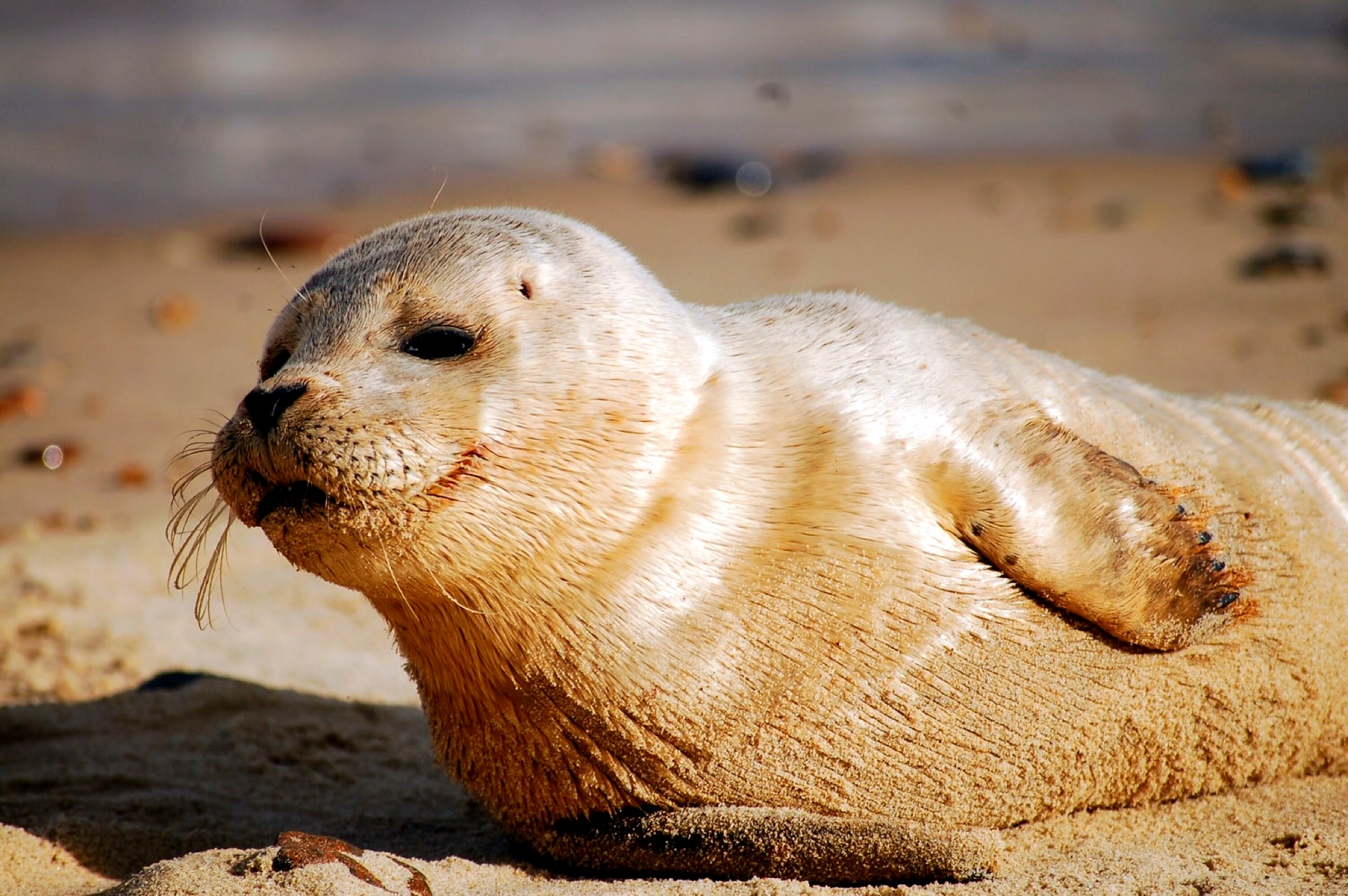
This report is concerned with analysis of the 2004 seal survey data, collected during the construction period of the wind farm. The Schedule to Licence states that a monitoring programme for the seals, as agreed with the Sea Mammals Research Unit (SMRU) should be carried out to determine the impact of the wind farm. This is specified in the licence as 2 fly-overs per month at low water for the six summer months (April to September) pre, during and post construction. Data collected prior to construction in 2002 and 2003 were to establish the baseline conditions against which the potential impacts of the wind farm could be measured. The licence states that the data collected during each fly-over should be copied to SMRU and a written report provided to the Licensing Authority at three monthly intervals.
 Series
2003-2005, Cefas, Scroby Sands, Coastal Processes Monitoring
This project concerns a programme of research and monitoring that has been undertaken at the site of Scroby Sands Offshore Windfarm to observe, measure and quantify potential impacts on the coastal processes. This has been achieved by a series of seabed surveys and seabed landers before, during and after the construction of the offshore wind farm. These provide evidence of any potential changes in seabed bathymetry, bedforms, currents, waves and suspended sediment concentrations that may lead to disturbance of sedimentary environments or sediment transport pathways. The conclusions from the surveys show that there are high levels of bed shear stress, scour pits have been created and scour tails have been created. Swath Bathymetry surveys will continue under FEPA licence conditions to generate a time series of Digital Elevation Models - This will enable the understanding of seasonal and inter-annual variability.
Series2003, ECON Ecological Consultancy, Scroby Sands, Seal Monitoring analysis
This project concerns the monitoring of the seal population near the offshore wind farm at Scroby Sands in 2003. This 2003 monitoring constitutes the last year of the pre-construction baseline survey. As stipulated in the licence requirements, monitoring took place in the form of aerial surveys conducted at approximately fortnightly intervals throughout the summer months. The aerial surveys were undertaken by Air Images Ltd using a Cessna 150 aerobat aircraft, flying at a height of approximately 1000 ft and at a speed of 80 knots. Positioning was judged on a purely visual basis, due to the natural variation in the position of the Sands. The intervals between surveys and the time taken to carry them out varied according to weather conditions. Surveys were conducted at low tide, when the sandbank was most visible, and the greatest number of seals was present.
 Series
2002-2003, ECON Ecological Consulting, Scroby Sands, Ornithological Monitoring
The primary aim of this project was to monitor the impact of the proposed wind farm upon little terns, although impacts on other species (38 species) have been recorded during the study. The surveys carried out prior to construction were to form a baseline against future change with the presence of the wind farm. The work was divided into the following areas: feeding studies, breeding colony studies, prey studies and bird strike studies. Little Terns have not bred in numbers at North Denes which has hampered the construction of a baseline to compare against future change. In general terms it will not be known how the construction of the wind farm will impact the populations of little terns until the wind farm has been built.